
Last Sunday I stood at my kitchen bench with a bowl of just-picked basil and a bar of dark chocolate, and I ate one square so slowly that my partner asked if something was wrong. Nothing was wrong. I was tasting it. Really tasting it, the way I taste a sauce I’ve been building all afternoon, and I realised how rarely I give food that kind of attention once it leaves the stove.
That’s the odd thing about growing herbs and developing recipes for a living. I fuss over every leaf and every pinch of salt, then I eat standing up, half-reading my phone, and I couldn’t tell you what the last three mouthfuls actually tasted like. Sound familiar? Most of us know a great deal about food. What we’ve lost is the habit of being present while we eat it.
Knowing about food is not the same as being with it
Years ago Golden Door published a lovely piece on this by Charlotte Thaarup-Owen, a clinical mindfulness consultant who runs eating and mindfulness programs. One line of hers has stayed with me: for a lot of people, the struggle around food isn’t a lack of knowledge at all. It’s a disconnection from the body, from emotional awareness, and from any gentle way of steering our own habits.
I think she’s onto something. You can read every label, memorise every macro, and still finish a packet of something without noticing. It’s hard to manage what you’re not aware of. Charlotte also points out that going on a diet is one of the better predictors of future weight gain, which is a humbling thing to sit with if, like me, you’ve tried a few over the years.
The pleasure is in the first bite
Here’s the idea that changed how I eat. When we eat mindlessly, we keep going mouthful after mouthful chasing a feeling of pleasure. But the pleasure, mostly, lives in that first bite. The first sip of coffee. The first spoon of a curry you’ve simmered for hours. The tenth bite is rarely as good as the first, and if we’re honest we stopped tasting it somewhere around the fourth.
So I’ve started treating the first bite as the main event. I put my fork down between mouthfuls. I notice the temperature, the salt, whether the herbs are singing or sulking. It sounds precious written down, and my kids would tease me for it, but it genuinely means I reach for a second helping less often, because the craving was really a craving to taste, and I’ve already done that.
Why connection fills you up
There’s a physiological thread here worth mentioning, and I’ll tread carefully because I develop recipes, I’m not a scientist. Charlotte’s article cites research by Dr Elizabeth Lawson at Harvard Medical School suggesting that oxytocin, sometimes called the “love hormone”, is associated with feeling satisfied sooner and eating a little less. Oxytocin is the one linked to calm, trust, contentment and feeling connected to other people.
What’s interesting is when it shows up: laughing, singing, dancing, a hug, a shared meal with people you love. In other words, the times we feel most at home in our lives. It makes a kind of sense to me that a table full of conversation and unhurried company leaves us more satisfied than a rushed plate eaten alone. If you want a plainer overview of how appetite and fullness signals work, Better Health Channel is a sensible place to start.
Where the food actually goes
How often have you looked forward to something all week, sat down with it, and then blinked and it was gone? You barely remember eating it. That missing piece is presence, being genuinely focused on the experience in front of you rather than the next thing on your list.
Charlotte tells a story about a woman on one of her programs who, after a single day of practising this, enjoyed her evening glass of wine more than she ever had, and as a result had only the one. That’s the part I find quietly reassuring. Mindful eating isn’t about eating less through willpower. It’s that when you’re properly present, one is often enough, because you actually received it.
Small ways I’ve built the habit
None of this needs a special program or a retreat, although Golden Door has run wonderful mindful eating retreats with Charlotte if you’d like the full immersion. Mostly it’s tiny shifts. Here’s what has stuck for me:
- Sit down. Even for a snack. Standing at the bench is where mindless eating lives.
- Start with the senses. Look at the colour, breathe in the smell, notice the first taste before you decide anything about it.
- Put the fork down. Between bites, not just at the end. It slows everything by a beautiful margin.
- Eat with people when you can. The conversation is doing more than you think.
- Grow one thing. A pot of basil or mint on the windowsill. When you’ve tended food, you tend to eat it with more attention.
If your relationship with eating feels tangled up with stress rather than hunger, that’s worth being honest about too. Sometimes we reach for the pantry to soothe something a snack was never going to fix. A few of my colleagues have written on easing everyday stress, and there’s a gentle read on calming foods that pairs nicely with slowing down. For the bigger picture on eating well without the diet noise, our piece on getting nutrition right is a good companion.
The permission I wish I’d given myself sooner
My honest opinion, after years of testing recipes for other people to enjoy, is that we’ve made eating far too clever. We’ve turned every meal into a maths problem and forgotten it’s meant to be a pleasure. Mindful eating gave me the opposite instruction: slow down, pay attention, and trust that your body knows when it’s had enough if you actually let it speak.
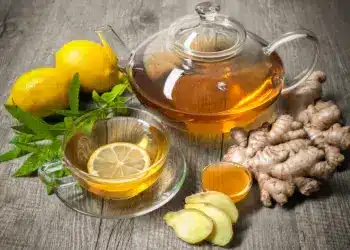
Try it with your next cup of tea. Just the tea, no phone, no screen, the whole two minutes. Notice how it smells, how it warms your hands, that first proper sip. If you want somewhere to begin, a plain honey-and-lemon brew works a treat; we’ve got a simple recipe here. You might find, as I did, that being present is its own kind of nourishment, and that most of what we’re hungry for isn’t sitting in the fridge at all.
For anyone wanting a trustworthy Australian starting point on healthy eating patterns, Eat for Health lays out the basics without the fads. And if this stirs something bigger for you, be kind about it, one bowl of basil at a time.
– Mei Lin, Golden Door Living